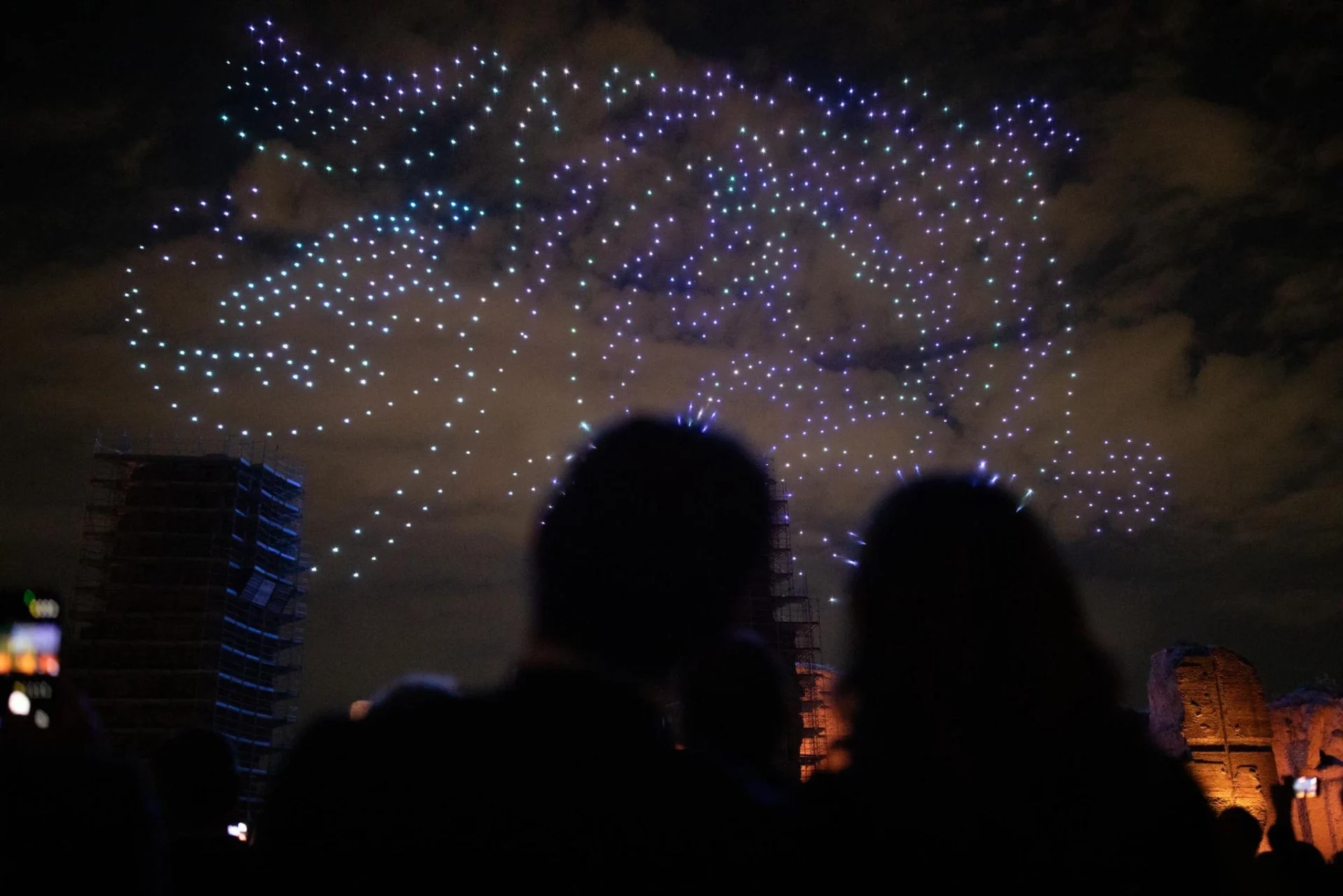
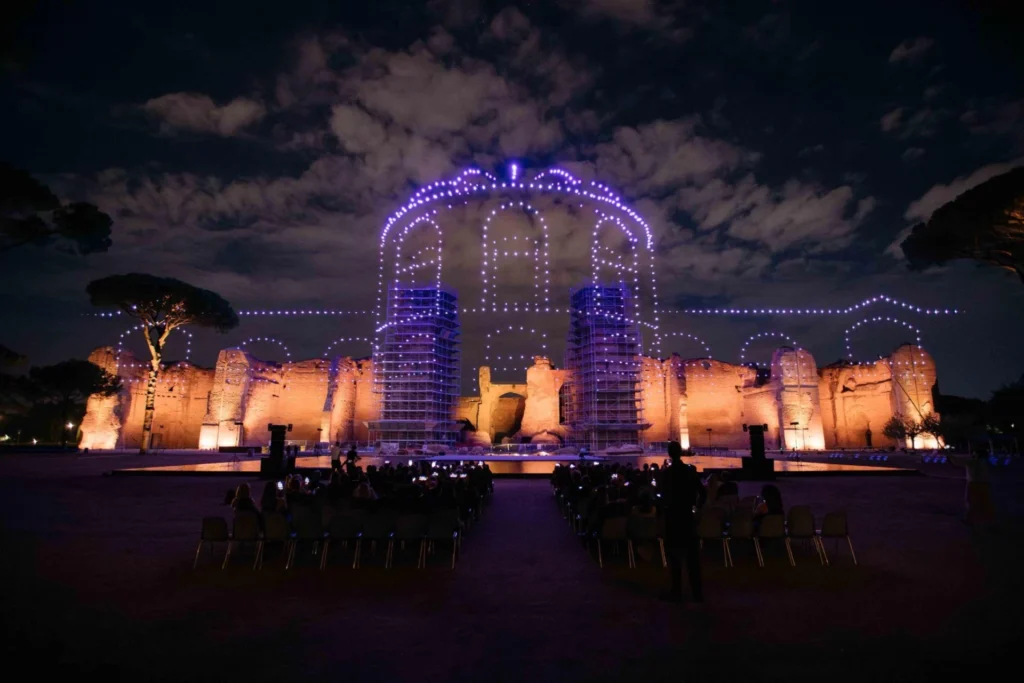
On September 14, 2026, as night fell, the ruins of the Baths of Caracalla were restored to their former glory. For a few minutes, 800 drones recreated above the site the structures that had been lost for more than fifteen centuries. The show, produced by Allumee in collaboration with Dentsu Creative Italia, celebrated a milestone anniversary for a renowned international brand.
The Baths of Caracalla, an extraordinary site
Commissioned by Emperor Caracalla and inaugurated in 216, the Baths were among the largest public facilities in the ancient world. People did not come there just to bathe: they played sports, socialized, and spent the day there. The complex could accommodate up to 1,600 bathers at a time, and it remained in operation for more than three centuries, until 537, when the Gothic king Vitiges had the aqueduct that supplied it cut off.
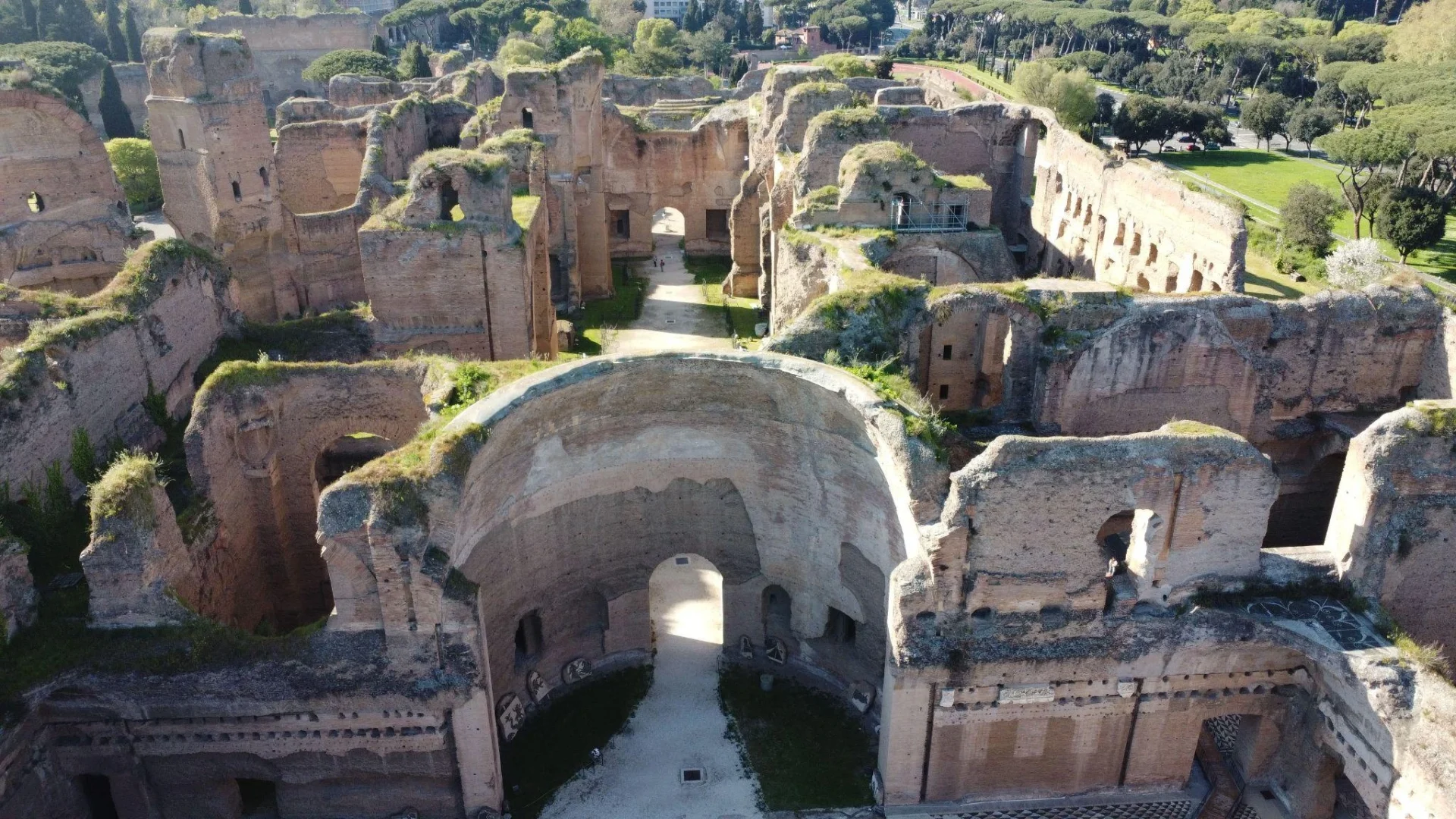
These are the best-preserved Roman baths in existence today; they were also designated a UNESCO World Heritage Site in 1980
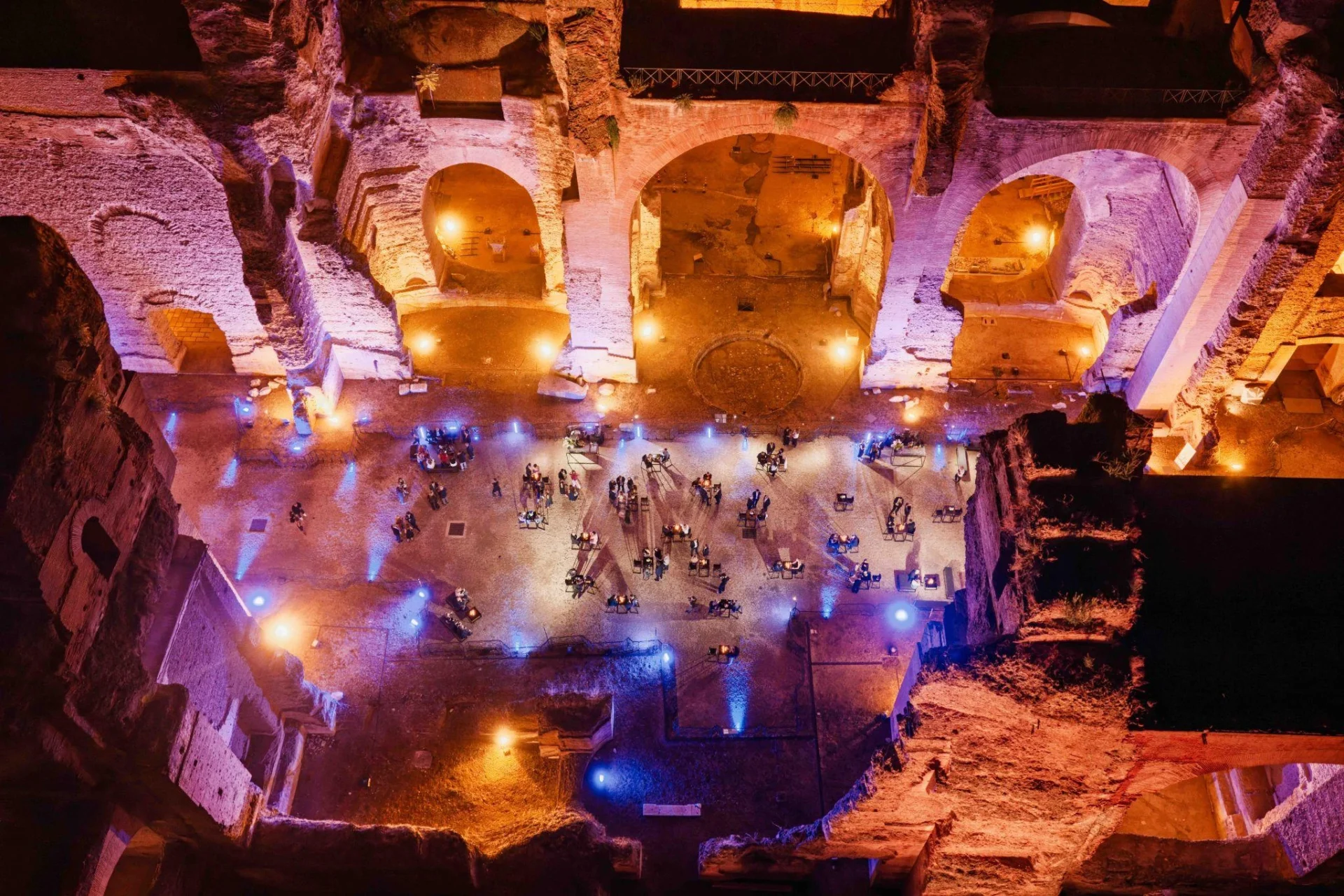
Today, what remains are immense walls, mosaics, and above all, that sense of grandeur. Creating a sound-and-light show in a place like this leaves no room for approximation. The site is a designated historic landmark, there are numerous restrictions, and the show must enhance the site without ever overshadowing it.
A drone show designed specifically for the venue
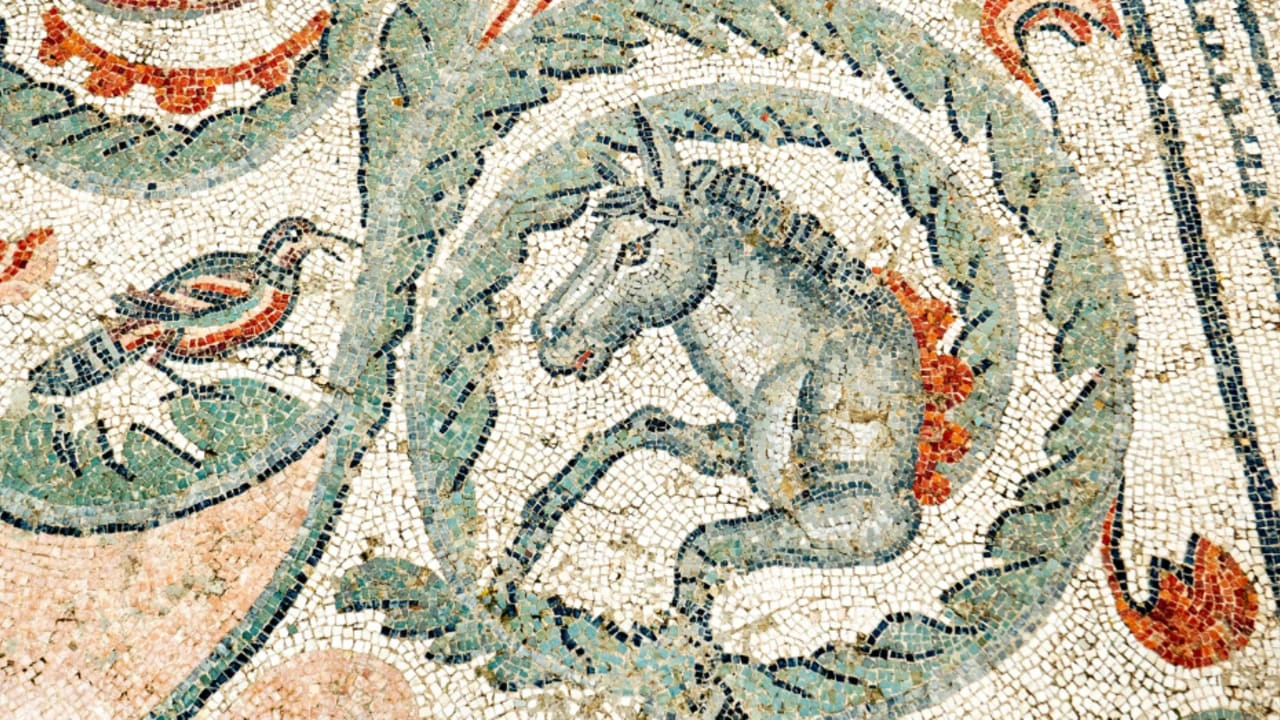
Our artistic team chose to work with the original architecture so that the illuminated sky would become an extension of the ruins. Each painting was conceived based on elements of the Baths of Caracalla: their structure, their mosaics, and the symbolism of water.
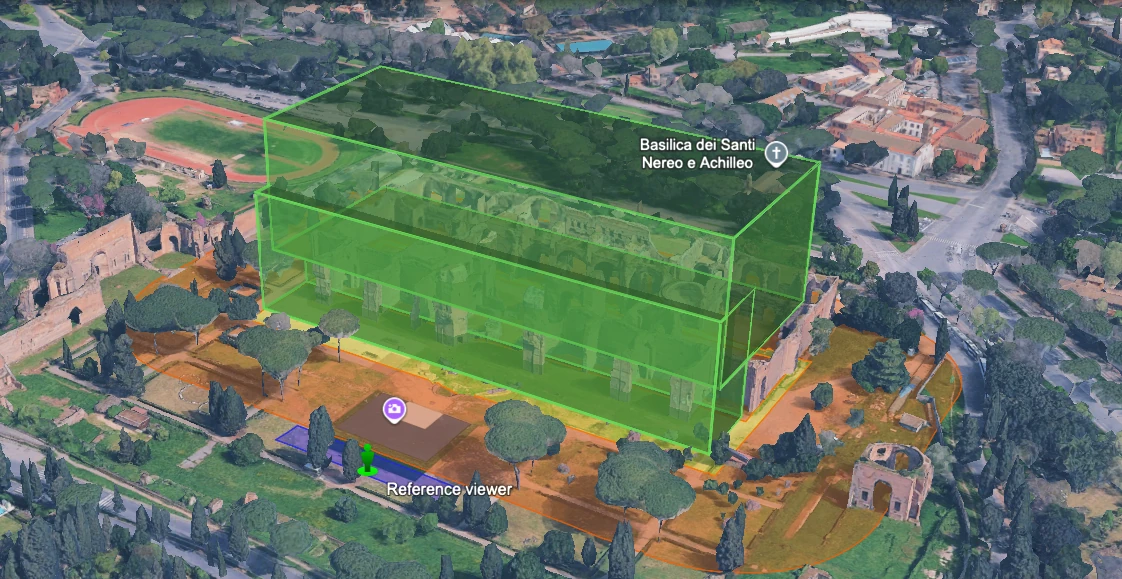
Our 3D artists modeled the entire architecture of the site so that the drone formations would align precisely with the ruins as seen from the audience’s perspective.
What were the artistic choices made for this show?
Our client wanted to limit the number of scenes but make them impressive, so that viewers would have time to admire them. The main challenge was to inject dynamism into these static formations. Of course, the location itself—the impressive size of the flight zone and the number of drones—helped a great deal. At the same time, we worked on the color scheme using a limited palette of mainly blue and white, and alternated between different color effects as well as light sweeps. We wanted an elegant and understated look so as not to detract from the location.
Between abstraction and reconstruction, where do you draw the line?
The show combines both elements. Some of the scenes depicted the site as it once was: the buildings at actual size, the mosaics. Another, slightly more abstract but equally symbolic part consisted of more organic, less static particle effects that evoked new emotions. The show was accompanied by cinematic, highly emotional music. The ruins were also illuminated to highlight both the site and the performance. We sought a true symbiosis between the show and the architecture, so that each would resonate with the other.
800 drones flying over a UNESCO site
A production of this scale in Rome requires a thorough understanding of permits, heritage restrictions, and the local terrain.
How do you prepare for an event like this, from the final rehearsals to the show itself?
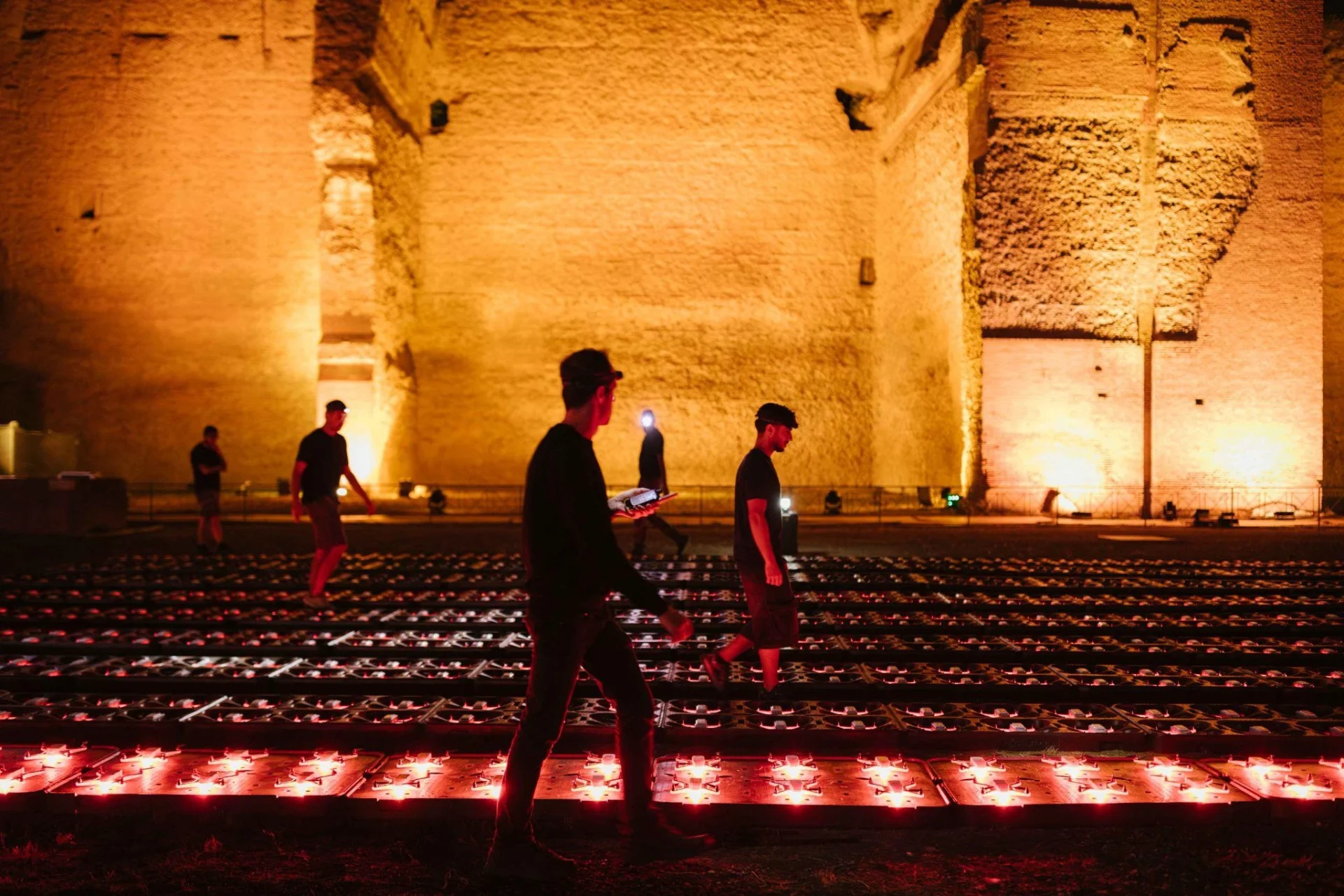
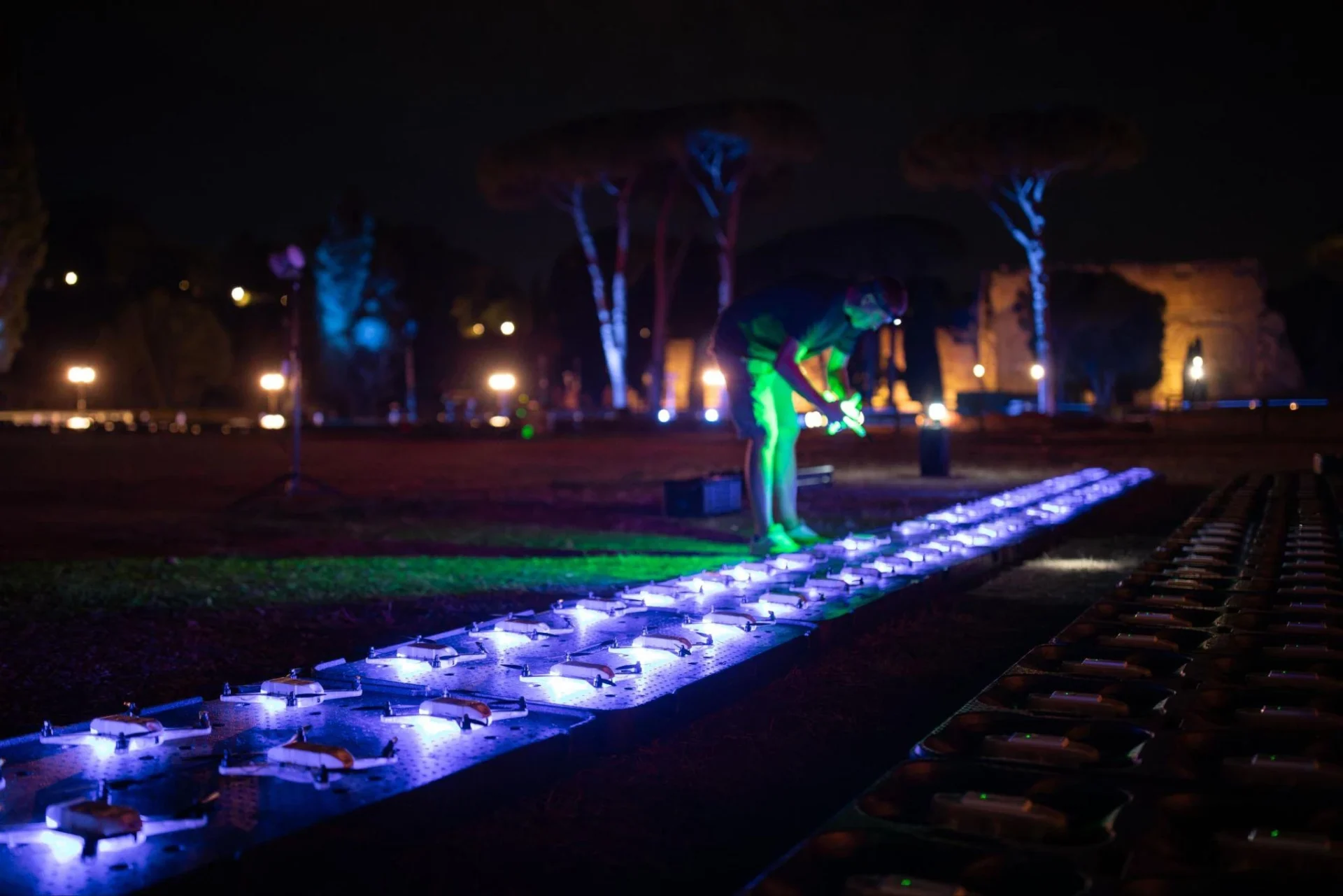
Leading up to the show, we conducted several rounds of testing, including flights by groups of drones just a few meters above the ground. These tests are used to verify the magnetometers—the sensors that allow each drone to navigate. At a site like this, even the slightest magnetic disturbance can throw off a flight path.
The day before, we also held a dress rehearsal under show conditions. We took the opportunity to test several lighting setups for the ruins to find the one that best showcases both the site and the show.
A collaboration between Allumee and Dentsu Creative Italy
The project was carried out in collaboration with Dentsu Creative Italia, which coordinated the event. On the Allumee side, the show was led by Allumee Italia, our Milan-based team, with support from our creative and operational teams in France.
A Message from Luigi Onesti, Managing Director of Allumee Italia
“This is a project I’ll remember for a long time! Seeing 800 drones fly over the Baths of Caracalla and recreate the magnificence of this iconic Roman monument was simply magical. This is truly a one-of-a-kind project that Allumee Italia carried out to celebrate an exceptional client, in a setting where history, technology, and creativity came together in a truly unique way.”
Vanity Fair Italia described the show as a journey through time, while highlighting the quality of the execution and the impact of the drone show. This makes me particularly proud of the teams that contributed to this project. Because behind those few minutes in the sky lay weeks of creative work, administrative tasks, coordination, logistics, numerous rehearsals, and a remarkable team effort.
“I can only thank Dentsu Creative Italy for placing their trust in us on such an exceptional project.”
An event that received widespread coverage in the Italian press
Several Italian media outlets have highlighted what has been at the heart of the Allumee initiative since its inception: using technology to tell a story







Overall coordination of the event on behalf of an international brand.

Artistic direction, 3D modeling of the site, and operational management of the 800 drones.