
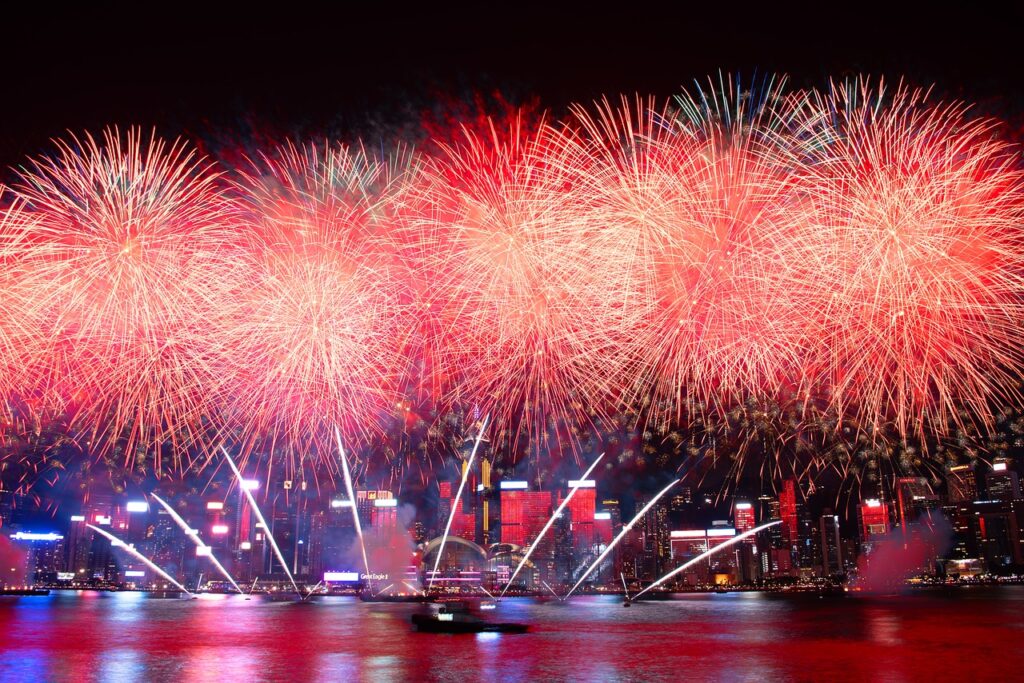
In a nutshell
A ban on fireworks is often the result of a prefectural order related to fire risk, not merely an administrative whim.
- Fines range from 135 euros to 15,000 euros, depending on the severity of the offense
- Fireworks mortars remain strictly prohibited for private individuals
- Alternatives such as drone shows already exist
A ban on fireworks is first and foremost a matter of public safety, rather than a regulatory issue. The confusion often stems from the fact that people confuse a permanent ban with a temporary ban related to drought. We’ve seen too many municipalities cancel their fireworks displays on the eve of July 14 without understanding why, when the answer could be summed up in a single sentence: the prefect had signed an order the previous week.
What stands out when you dig deeper into the issue is the gap between what the law permits on paper and what reality actually dictates. Between conflicting prefectural decrees from one department to another, between one city hall that goes ahead with its fireworks display despite the heat wave and another that cancels it as a precaution, citizens find themselves confused. We’re going to clarify all of this, without jargon and without leaving anything out.
The Real Reason Behind the Bans: Beyond Simple Regulation
French regulations strictly govern the use of recreational fireworks, but they do not fully explain the wave of bans observed in recent years. The National Assembly has, in fact, received several citizen petitions calling for broader regulations, evidence that the issue goes beyond mere safety concerns regarding fireworks displays. Current prefectural decrees combine two distinct objectives: preventing accidents related to direct use and managing fire risk during dry seasons. This reality is prompting more and more organizers to explore alternative fireworks displays capable of adapting to these constraints without jeopardizing the event itself.
Drought and Fire Risks: The Often-Overlooked Impact of Climate Change
Even the most harmless fireworks can become a major hazard when vegetation is dry. The prefectures of Pyrénées-Orientales, Puy-de-Dôme, and Ariège have banned fireworks for several consecutive weeks due to high temperatures and a persistent drought. This link between climate and the ban is rarely explained clearly in existing content, even though it is the number one cause of the current cancellations.
How Prefectures Decide to Issue Bans in Real Time
Each prefecture monitors specific indicators: soil moisture levels, wind speed, and the Météo-France drought index. As soon as these thresholds are exceeded, an order goes into effect—sometimes within a few hours. Platforms such as ARDI compile a list of these orders by department to allow for quick verification before any event.
The Hidden Cost for Pyrotechnics Professionals
Behind every ban, businesses lose revenue. In the Basque Country, a one-month ban resulted in a 40% loss in revenue for some professional pyrotechnicians. Sales of pyrotechnic products plummet automatically as soon as a ban is issued, with no compensation provided for under current law.
Who Really Makes the Decisions: The Hierarchy of Power and Its Contradictions
Drone shows for local communities are gaining popularity precisely because the French bureaucratic red tape complicates the organization of a traditional fireworks display. Between the national government, the prefecture, and the municipality, there are three overlapping levels of decision-making, and each can tighten the rules set by the level above without ever relaxing them.
The French government sets the framework: national decrees and orders
Decree No. 2023-576 of July 8, 2023, establishes the classification of recreational fireworks into categories F1 through F4, as well as the conditions for their sale and use. This decree serves as the legal basis upon which prefectures then rely to tighten local regulations as needed, depending on the context.
Prefectures adapt measures to their respective regions
Each prefecture adapts national regulations based on its local risk level. A department in the south, which is experiencing a summer drought, enforces much stricter rules than a department in the north. This regional adaptation explains why two neighboring cities, located in different departments, may have completely opposite rules in effect during the same week.
Can municipalities circumvent prefectural bans?
No. A municipality can never authorize something that a prefectural order prohibits. The prefectural order takes precedence over any municipal decision, even if the mayor believes that the municipality’s fireworks display poses no danger. Some municipal governments have learned this hierarchy the hard way by going ahead with a fireworks display that was ultimately canceled by prefectural order the day before.
“White Zones”: Where Fires Are Still Permitted Even When Everything Around Them Is Burning
Certain coastal or urban areas, which are less at risk of wildfires, remain authorized to hunt despite widespread drought in the region. The list of these “white zones” is included in each prefectural decree published on the website of the relevant prefecture—a step you should take before making any plans.
How do professional and amateur fireworks differ in terms of how they are set off?
Legal and Secure Techniques in the Workplace
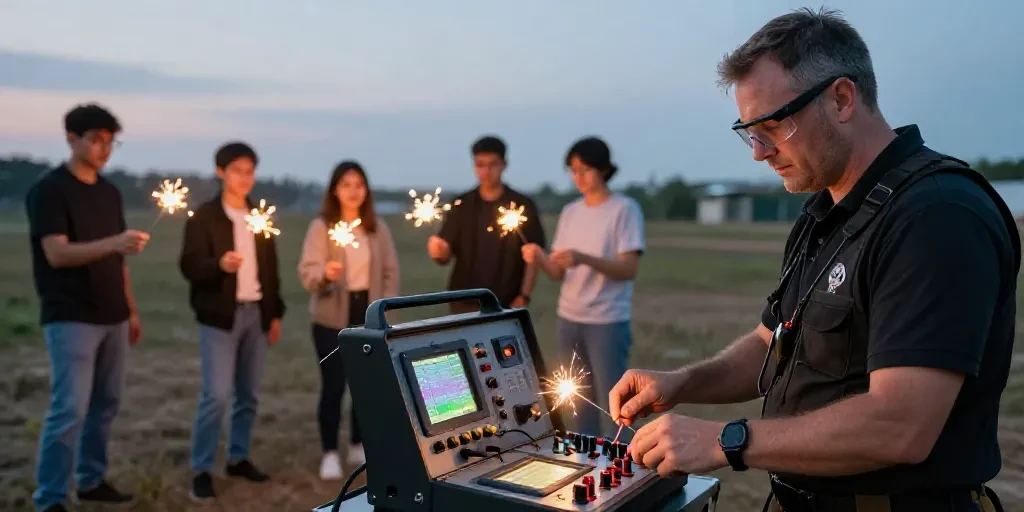
A certified professional pyrotechnician calculates the safety distance, wind direction, and trajectory of each launch before lighting the first fuse. Category F4 fireworks, which are reserved for professionals, require specific training and prior authorization issued by the prefecture.
Why are homemade fireworks more dangerous from a biological standpoint?
The human body reacts to a firecracker explosion with a recoil reflex, which causes the majority of injuries to the hands and face. Safety distances are never observed by untrained individuals, unlike professionals, who strictly adhere to a designated safety perimeter.
The Missing Certifications That Explain the Bans
The lack of certification among private individuals partly explains the strictness of the regulations. A certified professional can sometimes obtain an exemption, whereas a private individual is systematically excluded due to a lack of sufficient technical guarantees.
Is it legal to set off firecrackers at home?
The legal distinction between recreational firecrackers and fireworks mortars
Fireworks in categories F2 and F3, which are freely sold to adults, are clearly distinct from firework mortars, which have been strictly prohibited since the 2010 decree. The Paris Police Prefecture regularly reminds the public that the use of mortar shells remains prohibited even during national holidays such as July 14.
Actual fines: from €135 to €15,000, depending on the case
| Violation | Amount |
|---|---|
| Unauthorized Simple Use | 135 € |
| Shooting in a zone prohibited by ordinance | €1,500 |
| Possession of Fireworks | Up to €15,000 |
Police Checkpoints and How They Really Work
The National Gendarmerie primarily responds to reports from neighbors or conducts increased patrols during periods of drought. Inspections focus primarily on forested areas and the 200-meter zones surrounding forests, where open fires are prohibited year-round in several departments.
Creative Alternatives When Your Area Bans Bonfires
- No fire hazard
- Easily rescheduleable show
- Reduced environmental impact
Authorized Fireworks Displays and Licensed Professionals
Municipalities that retain their authorization use licensed pyrotechnics companies, which are the only entities authorized to handle Category F4 fireworks. ARDI lists these certified professionals by department, providing a useful reference before requesting a quote.
Light projections, lightweight drones, and holograms: the new way to party
Over the past three years, we have seen a clear shift toward light drone shows—a solution that completely eliminates the risk of fire while still delivering the spectacular experience the audience expects. A fleet of 300 illuminated drones traces complex shapes in the sky without producing a single spark on the ground—a decisive factor for municipalities located in high-risk areas.
Submit a formal request for an exceptional authorization
The application for an exceptional permit must be submitted directly to the prefecture, along with a technical report detailing the planned safety measures. The review process rarely takes more than two weeks, but the decision remains contingent on current weather conditions.
The Hidden Impact on the Events and Tourism Sectors
How Bans Fragment the Local Economy
Sales of fireworks plummet as soon as a decree is announced, resulting in a significant financial loss for specialty retailers and independent pyrotechnicians. This decline affects rural areas the most, where the town’s fireworks display is often the only community-building event of the year.
Towns That Are Losing Their Annual Traditions
Several municipalities in the Tarn and Lorraine regions have canceled their July 14 fireworks displays for two consecutive years, breaking a tradition that in some cases dates back a century. Residents surveyed expressed genuine disappointment, but the majority understood the safety concerns once the explanation was clearly provided.
When Drought Is More Punishing Than the Law Itself
Drought is now causing more cancellations than the regulations themselves. The legal framework has been in place for decades, but it is the increasing frequency of heat waves that is turning a rule that was previously rarely enforced into a systematic constraint every summer.
Fireworks Banned: Vigilance Remains the Best Protection
Checking the prefectural decree for your department before organizing any fireworks display remains the only reliable course of action. Regulations change with the seasons and weather conditions, rendering any information that is not up-to-date obsolete. We recommend consulting the website of the relevant prefecture directly, as it is the only truly up-to-date source for a topic that can sometimes change from one week to the next.
Frequently Asked Questions
How are fireworks set off?
A professional pyrotechnician places the fireworks in steel or PVC tubes mounted on a stable rack, calculates the safety distance based on the power of each firework, and then triggers the ignition remotely using an electrical system. This method ensures a synchronized and safe display, which is impossible to replicate with consumer-grade equipment.
Is it legal to set off firecrackers?
F1 and F2 fireworks, sold in stores to adults, remain legal outside of periods covered by a prefectural ban. Firework rockets, however, have been banned under all circumstances since 2010.
What are the regulations regarding fireworks for private individuals?
An adult individual may purchase and use F2 and F3 fireworks on private property without prior authorization, provided that no local ordinance restricts such use. The sale of higher-category fireworks is restricted to certified professionals.
Why have fireworks if the risks are so high?
Festive traditions and cultural attachment explain why fireworks continue to be used despite the well-documented risks. Alternatives such as drone shows are gaining popularity precisely because they preserve the collective excitement without the danger associated with traditional fireworks.