Drone Show for Independence Day: Answers to All Your Questions
Operations, safety, environmental impact, budget: a comprehensive look at drone shows—these “fireworks 2.0” that are reinventing the national holiday.
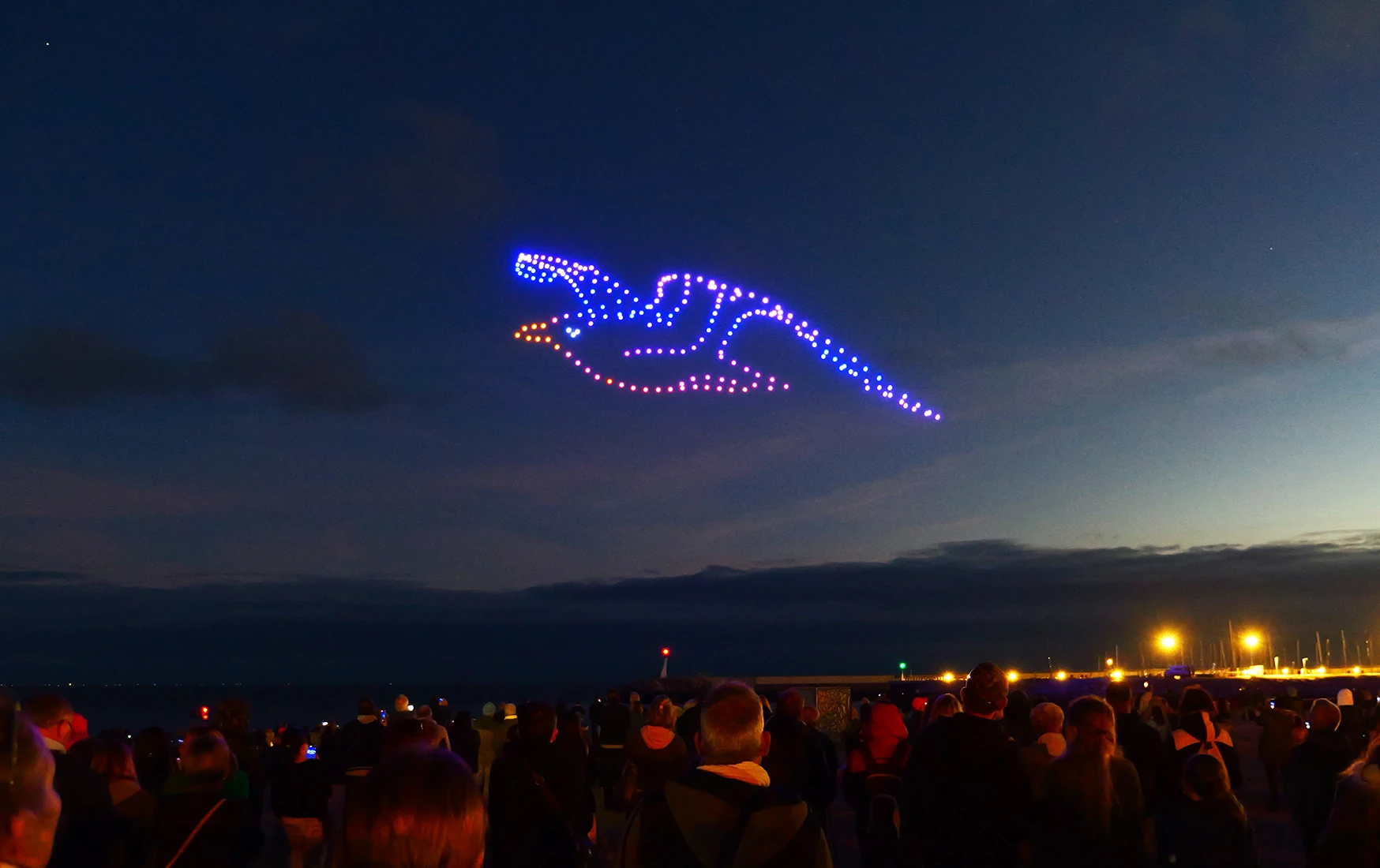
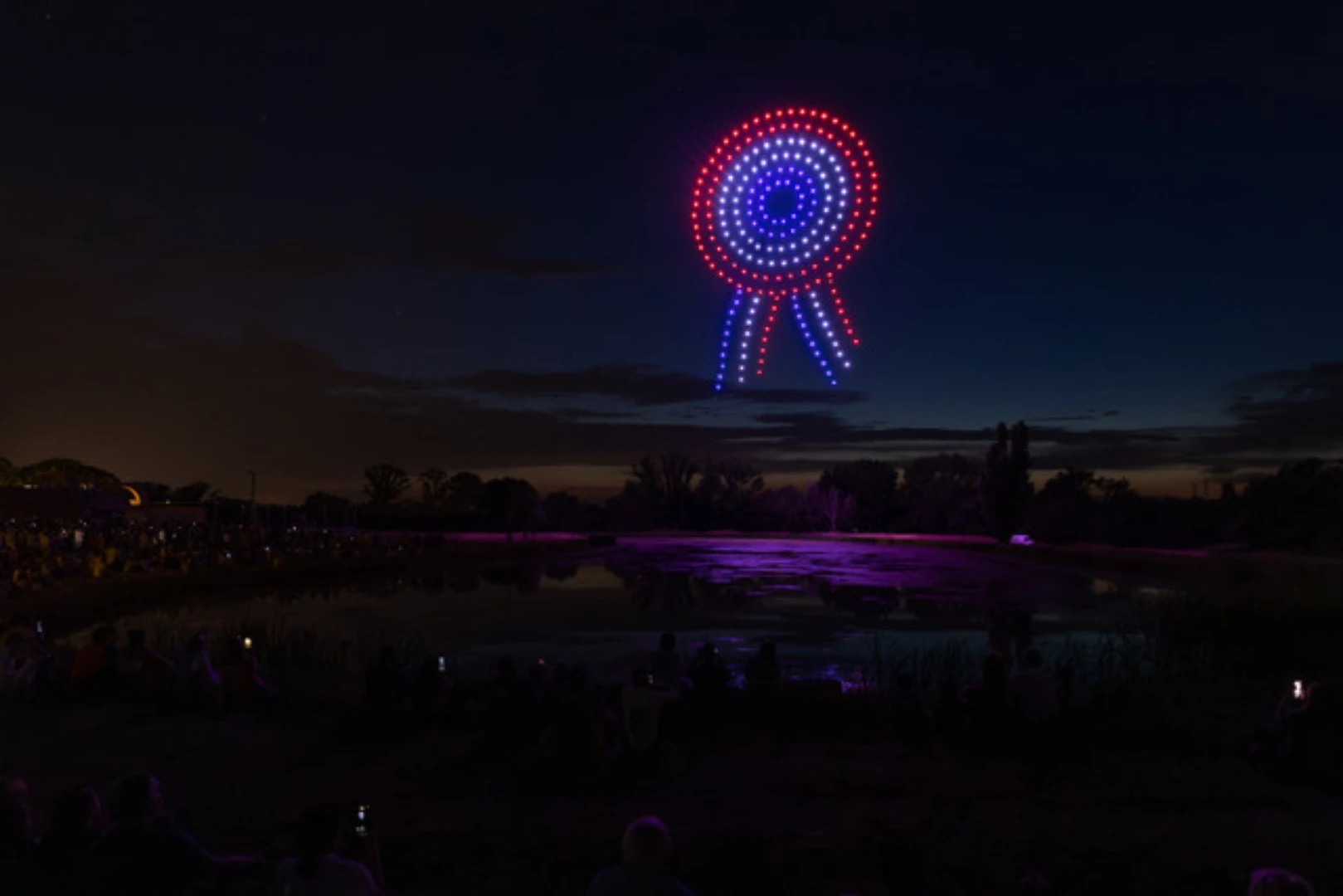
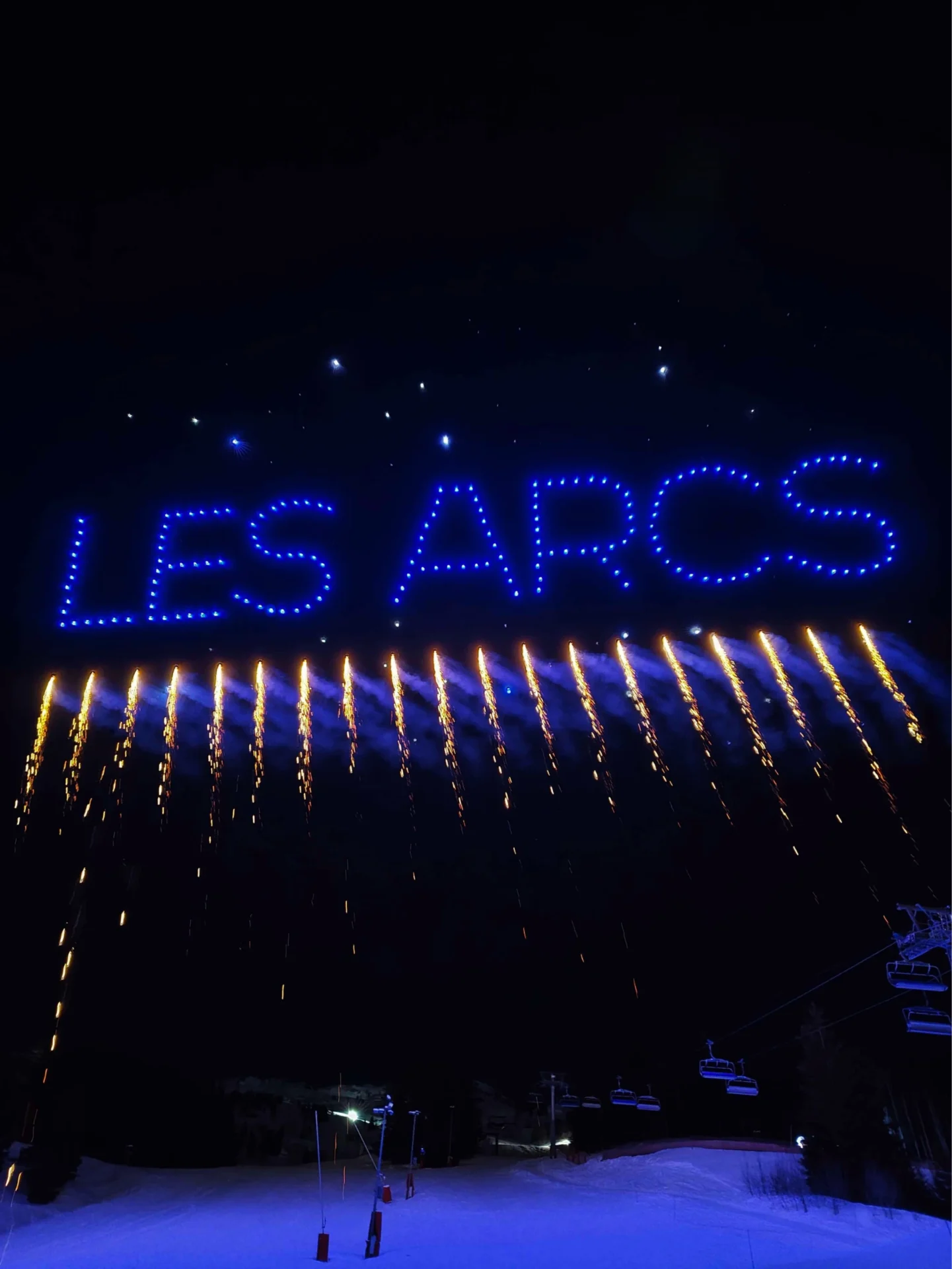
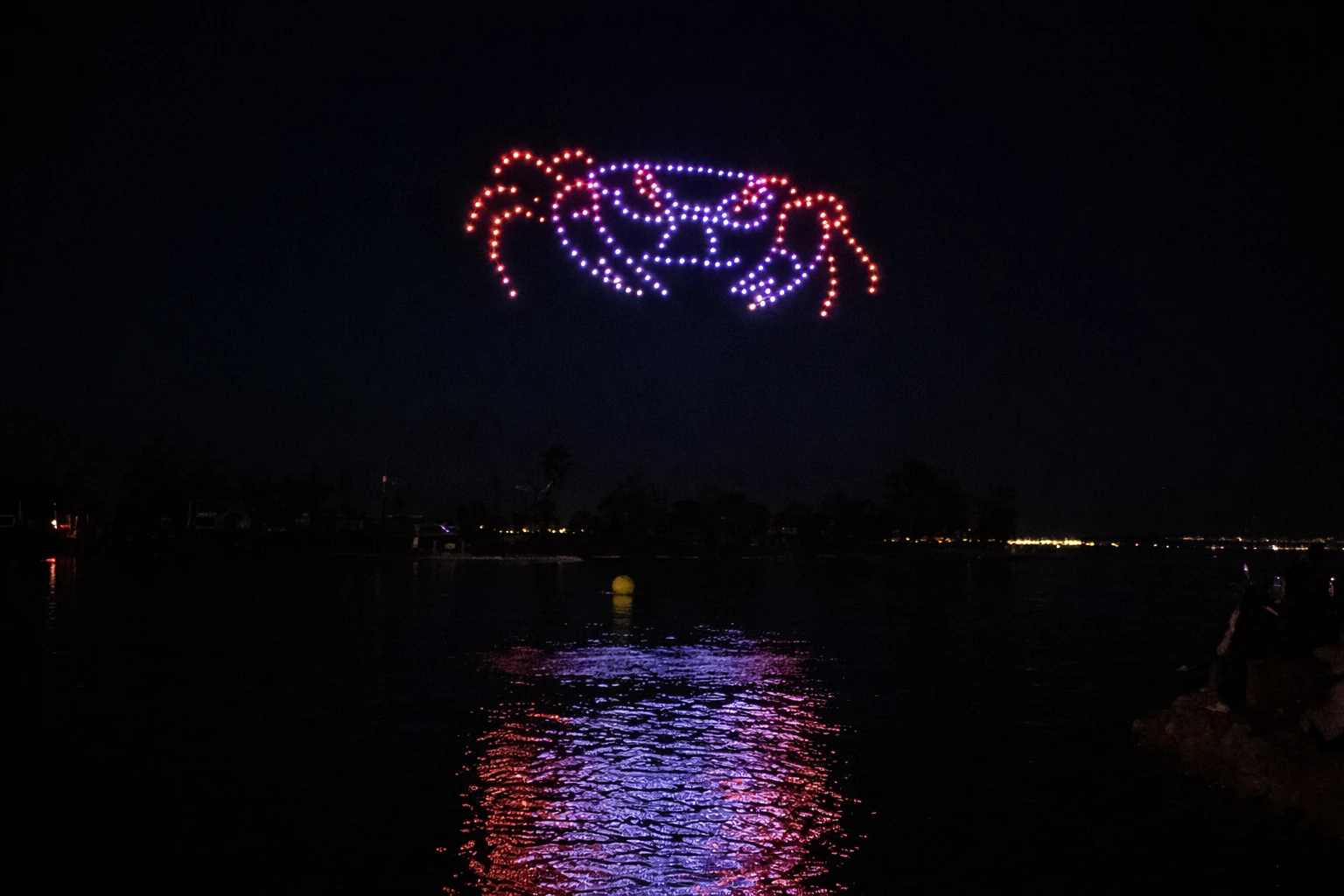
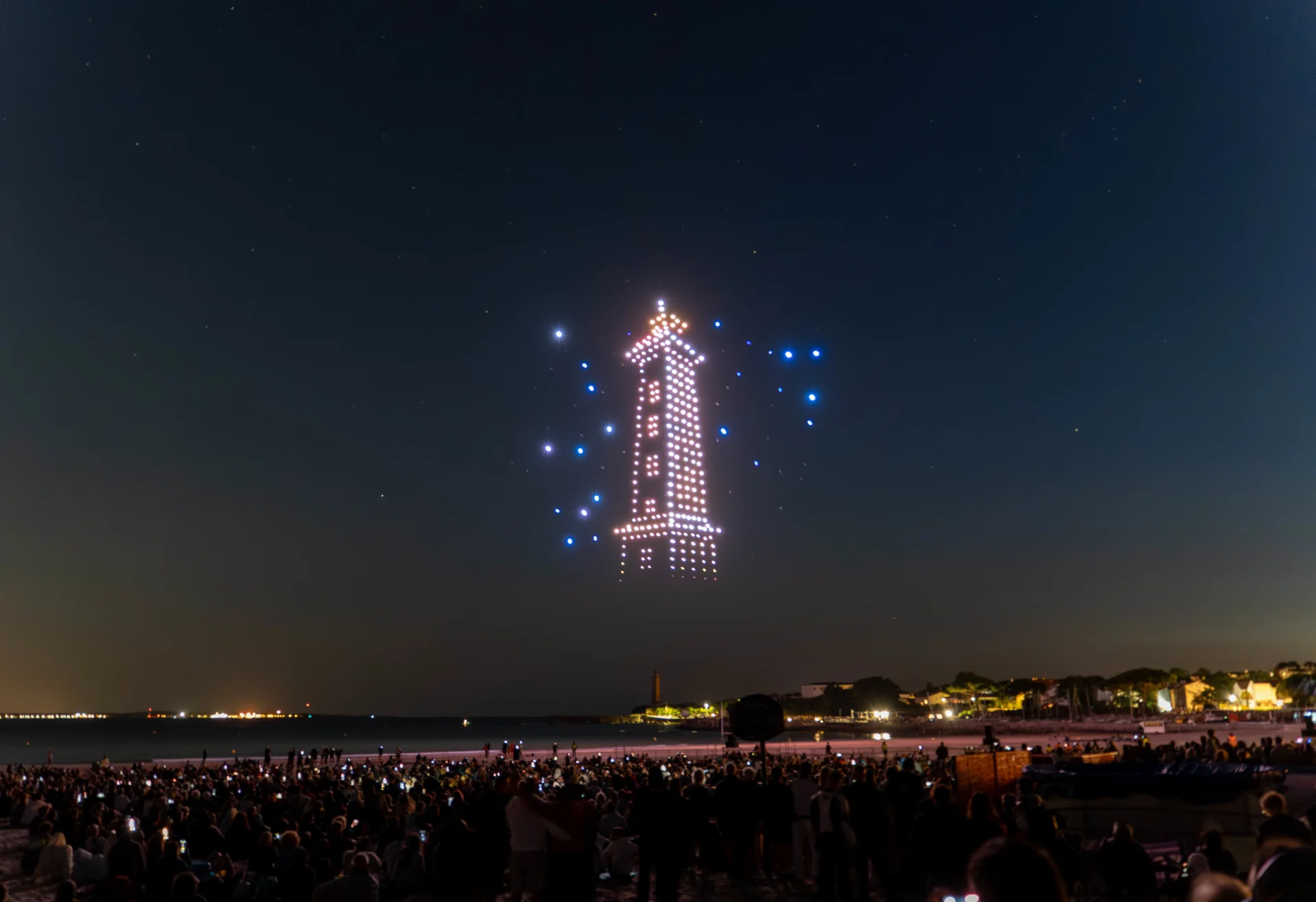
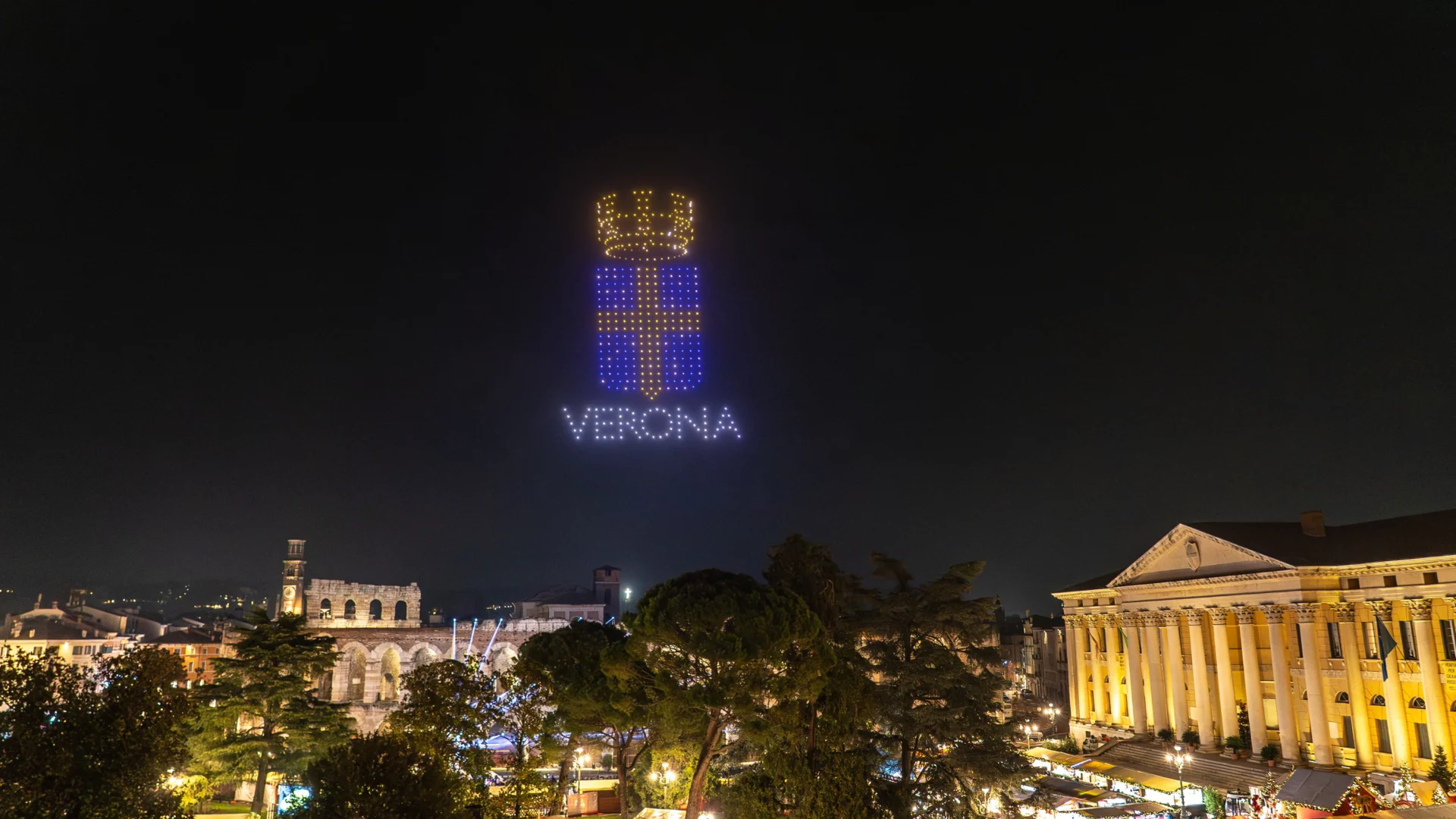
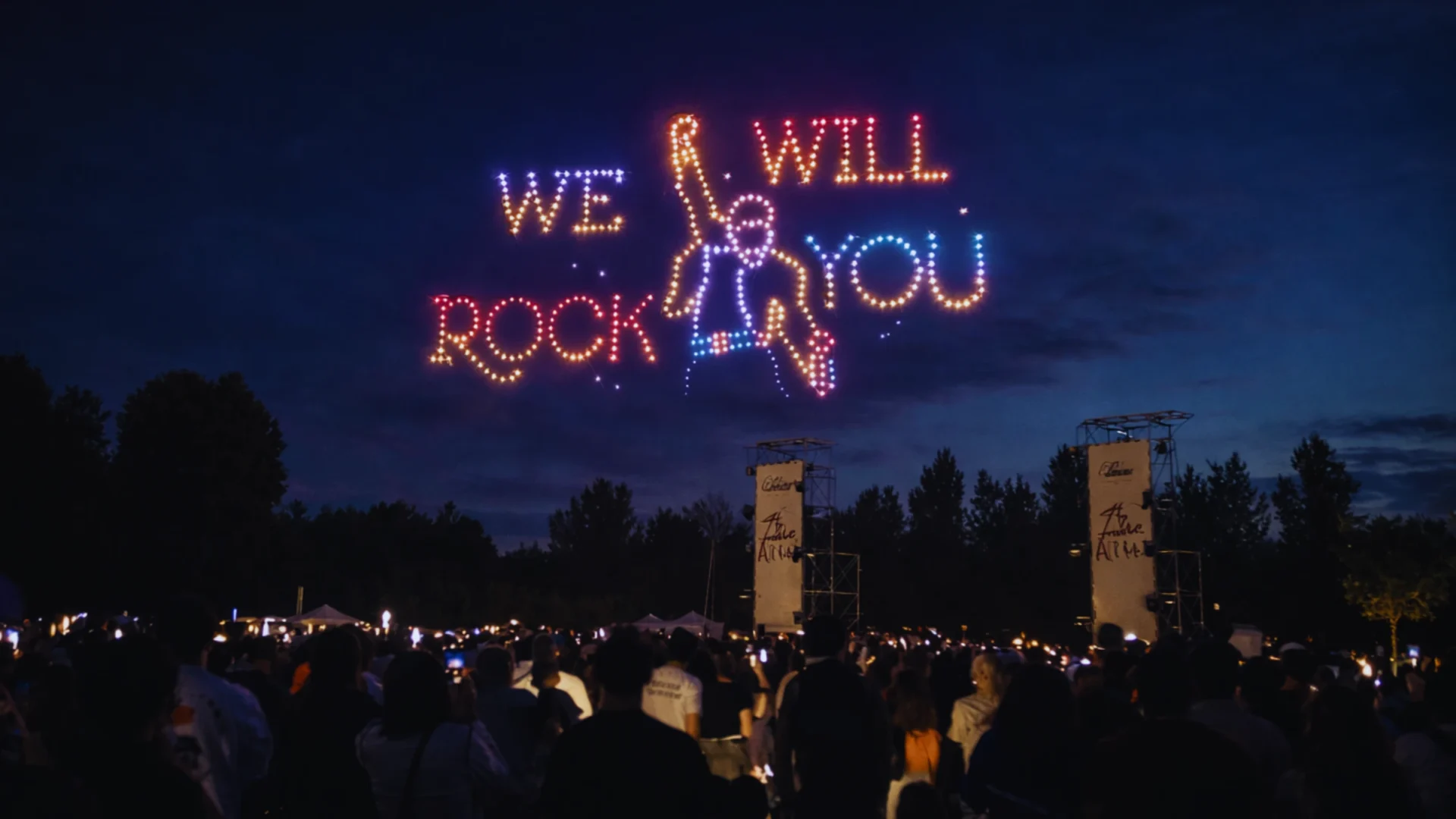
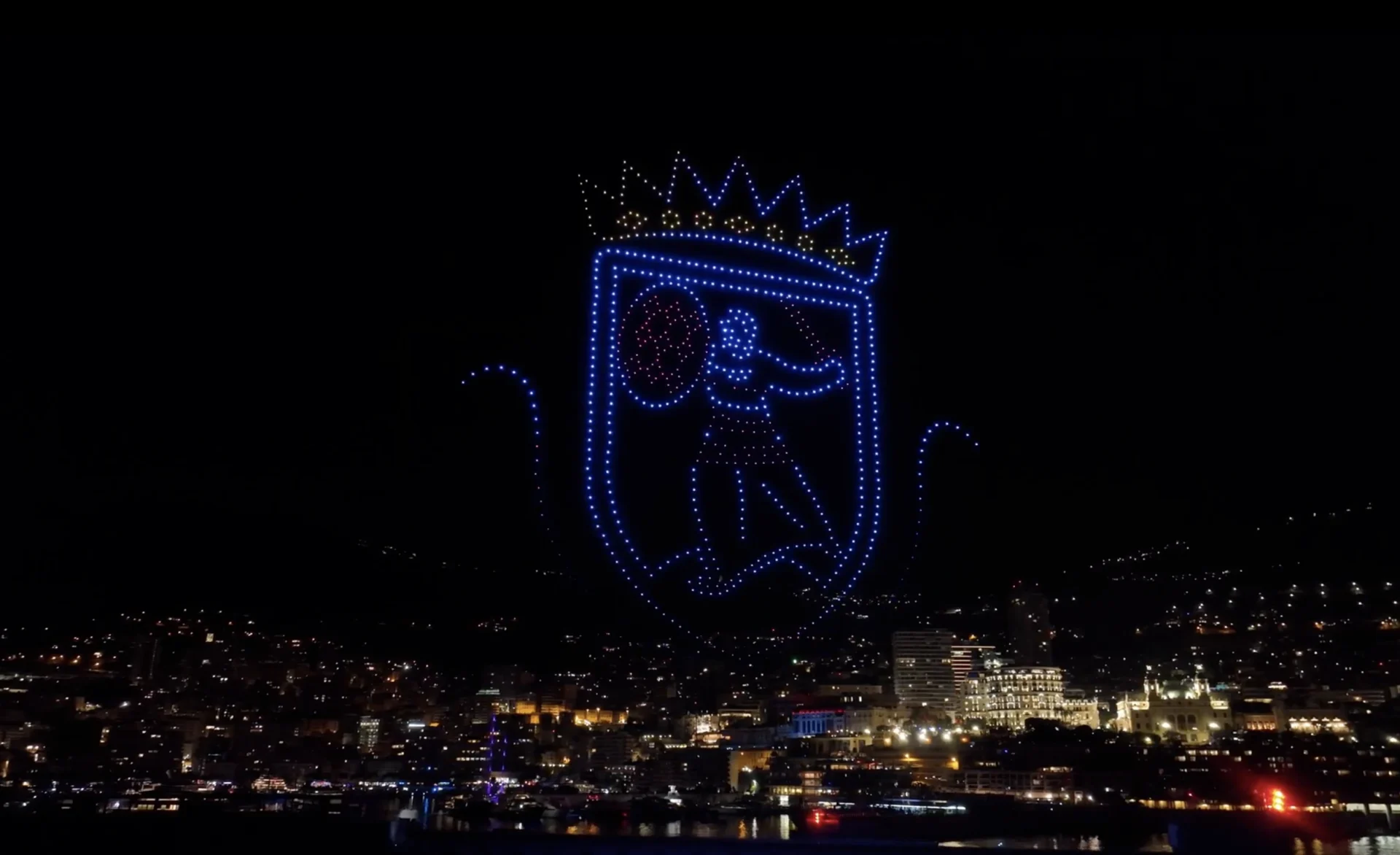
In recent years, you’ve no doubt seen light drone shows replace or complement the traditional fireworks displays on Independence Day. Hundreds of drones form a flag, a coat of arms, or a message above the city—a spectacle that is as fascinating as it is intriguing.
This rise in popularity is no coincidence. Between droughts that prompt prefectures to ban fireworks, municipalities’ efforts to reduce their environmental impact, and the desire to offer something new, these shows are becoming a permanent fixture on the scene.
How do they really work? Are they safe? Are they actually more environmentally friendly? And at what cost?
Here are the answers to all your questions.
1. What exactly is a drone show?
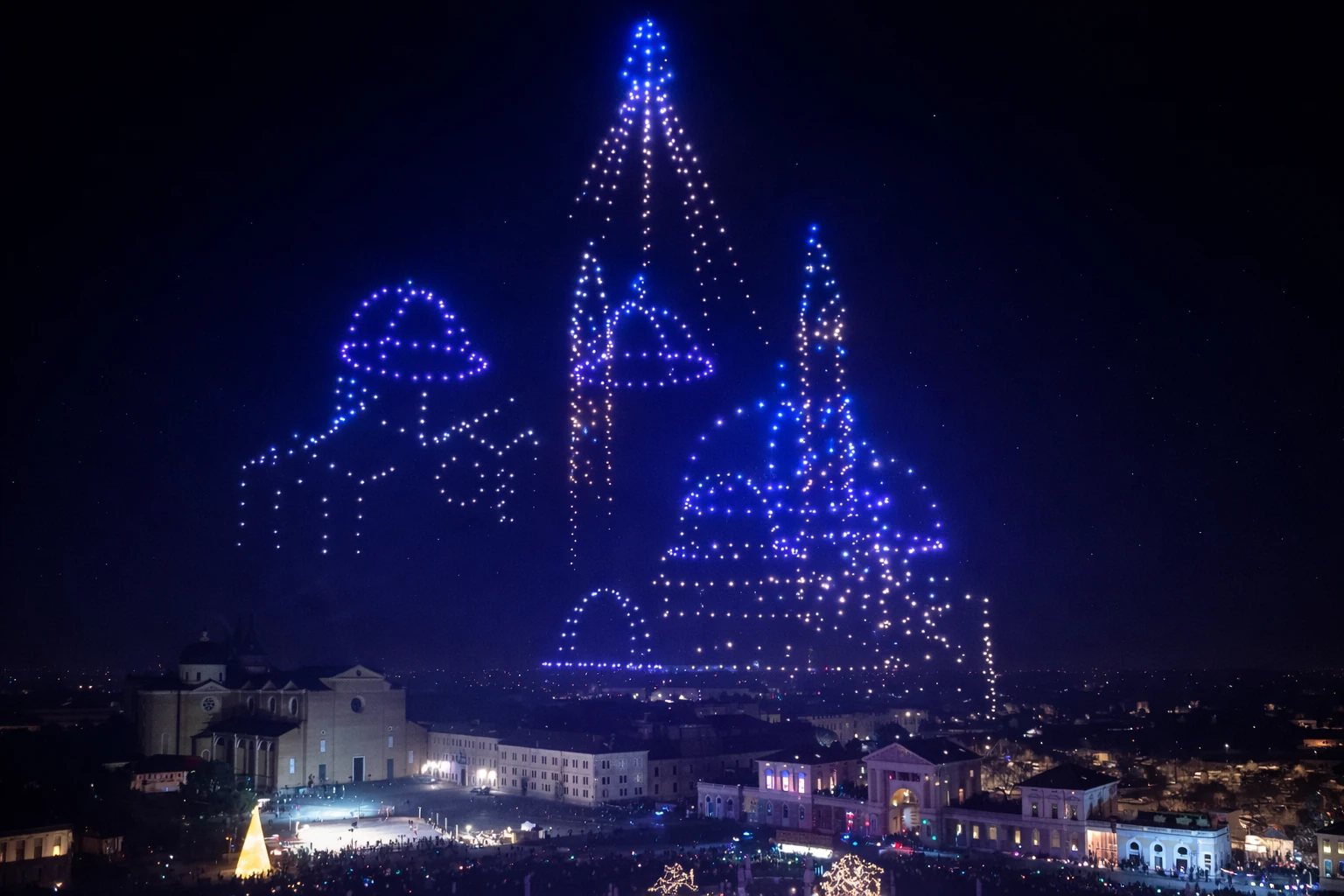
A drone light show features a fleet of small drones equipped with LEDs that fly in a coordinated manner to create shapes, messages, and animations in the sky. Each drone acts like a pixel: when there are several hundred or even thousands of them, they form three-dimensional images that are visible from hundreds of meters away.
Unlike a fireworks display, where the effect is fleeting and unpredictable, here everything is programmed in advance and perfectly controlled. You can display a town’s coat of arms, a date, a flag, a rocket taking off… and then move on to the next scene—all set to music.
2. How is a drone choreography created?
It all starts with a story, not with the technical aspects. The creative teams first define a narrative arc: the sequence of scenes, the emotion they’re aiming for, and the key moments. Then, they choose the music that will set the pace for the entire production. It’s this artistic step that distinguishes a beautiful show from a mere demonstration.
Next comes 3D modeling: each figure is designed in software that maps out the drones as points of light and calculates each one’s trajectory, frame by frame, to move from one scene to the next without colliding. On the big day, guided by high-precision GPS, the drones take off together, perform the choreography autonomously, and then land gently. A remote pilot monitors the operation at all times.
3. How high do drones fly? Can you see them from a distance?
Drones typically fly at heights of several dozen meters, making the maneuvers visible from several hundred meters away. You don’t have to be right underneath them—the show can be enjoyed from a wide area.
It’s actually an advantage for public safety and comfort: unlike a ground-level event, an aerial show can be viewed from various locations throughout the city, which prevents the entire crowd from gathering in one place. An open space can offer a wonderful view.
4. Is it more environmentally friendly than fireworks? What impact does it have on the environment and animals?
The numbers speak for themselves. A traditional 30-minute fireworks display burns about 3 metric tons of gunpowder and emits 1.5 metric tons of CO₂, the equivalent of a 12,500-kilometer trip in a gasoline-powered car.
A drone show, on the other hand, produces no waste during the flight: no smoke, no particles, and no debris to clean up.
As for noise pollution: no loud bangs, no loud noise. The noise from a fleet of drones in flight is roughly equivalent to a conversation between two people, which is quiet enough to ensure peace and quiet for children, sensitive individuals, and pets.
That said, noise and light can still disturb wildlife, particularly birds. The key factor, then, is the choice of location: a responsible operator will avoid sensitive areas and nesting seasons.
The environmental impact of drones stems primarily from battery manufacturing—the extraction of lithium for which comes at a cost—and from recharging them, although the reuse of the fleet and the recyclability of these batteries significantly mitigate this impact over time.
In fact, the same fleet can be used for dozens, or even hundreds, of shows.
Finally, one argument has become decisive: the risk of fire is virtually zero. During periods of drought, when fireworks are banned by prefectural order, drones are often the only option for keeping a celebration going.
5. Is it dangerous? What if a drone crashes?
No, if the show is conducted by a certified operator, there is no risk. The audience is also kept at a safe distance from the flight zone according to a simple rule: the higher the drones fly, the greater the safety distance from the ground. That’s why spectators are never directly beneath the drones, but generally about 100 meters away.
A drone malfunction is still possible, but it is anticipated: the systems include automatic safety features, the flight zone is off-limits to the public, and a remote pilot can take control at any time to bring the fleet back. It is precisely this exclusion zone that protects spectators.
6. Do the drones used in the show have cameras? Are they filming me?
No. The drones used for these shows are not equipped with cameras. They are deliberately lightweight devices, equipped only with LEDs, a GPS, a few sensors, and a battery. Their sole purpose is to light up and position themselves in the right spot.
In other words, they do not capture any images of the audience and are not used for surveillance. These performance drones are often confused with consumer drones, which do carry a camera, but they serve two completely different purposes.
From the Organizer’s Perspective
Here are some answers to the questions most frequently asked by elected officials and event organizers.
7. How much does a drone show cost?
This is the first question elected officials ask, and the answer depends mainly on the number of drones, the duration, and the level of customization. As a general guideline, a show featuring 200 drones starts at around €20,000 (excluding tax), while a larger-scale custom production can cost tens of thousands of euros.
At first glance, it’s more expensive than a fireworks display of comparable size. But it’s important to consider the full picture: the budget for a fireworks display also includes the safety perimeter, emergency response resources (firefighters, fire trucks), insurance, and cleanup of debris.
8. Is a specific authorization required?
Yes, a drone show is strictly regulated, and several authorities are involved. From an aviation perspective, the operator must obtain approval from the DGAC (Directorate General of Civil Aviation, through its safety division, the DSAC): each flight is reported, and each area is analyzed in advance. But as soon as there is an audience, a second step is required: a declaration and a request for authorization from the prefecture, accompanied by a safety report detailing the location, the number of spectators, the risks, and emergency response measures. The city hall is also involved, particularly for night flights over public spaces.
In practical terms, the municipality doesn’t have to handle this process on its own: a reputable operator takes care of all these formalities. It is precisely because the prefecture is involved that you need to start the process early. Allow at least 45 days for a public performance.
9. Can wind and rain ruin everything?
The weather is the main limiting factor. Drones fly within specific wind speed limits (maximum 36 km/h). Rain is the other factor to monitor: drones can only tolerate a very light drizzle, and a heavier downpour requires rescheduling. This is a real constraint, but one that is managed through proven protocols.
Experienced operators know how to fly in challenging environments, including at high altitudes in the mountains and near the coast. The key is planning ahead: monitoring the weather in advance and on the day of the flight, as well as having contingency plans in place from the moment the contract is signed.
10. Drones or Fireworks: Which Should You Choose?
The two formats aren’t necessarily mutually exclusive; in fact, some municipalities combine them. But to help you decide, here are the key factual criteria, side by side.
| Criterion | Drones | Fireworks |
| Pollution and Residues | No emissions during flight | CO2, particulates, debris |
| Fire hazard | Virtually none | Real, especially during droughts |
| Noise Impact | Low | Loud explosions |
| Reuse | Fleet reusable for several years | Used up with each shot |
| Show duration | 12–25 minutes | 15–35 minutes |
| Customization | Full: story, shapes, music, colors | Limited: effects, music |
| Emotional Impact | Awe, modernity, surprise | The thrill of the explosion, childhood memories |
| Cost | Starting at €20,000 (about €100 per drone) | Starting at €15,000 (approximately €1,000 per minute) |
In summary: Drones have the edge in terms of noise, environmental impact, safety, and creativity; fireworks still have the advantage when it comes to cost, duration, and that unique physical sensation of an explosion. The right choice depends on the context of the event in question, but sometimes also on a simple drought order.
11. Can the show be customized to reflect the city’s identity?
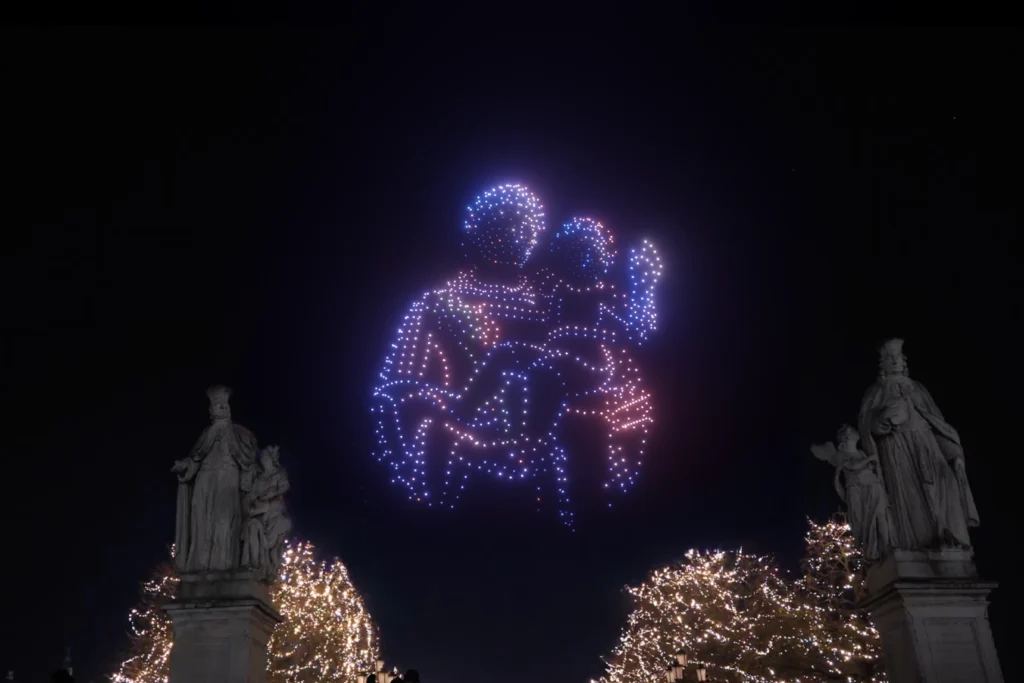
That is precisely the drone’s greatest strength. It can display the town’s coat of arms, its logo, its colors, an anniversary date, a message to residents, or a figure from local history in the sky. The sky becomes a medium for storytelling, entirely dedicated to the identity of the region.
Whereas a fireworks display offers a range of standard effects, a drone tells a custom-tailored story. For a national holiday, this makes it possible to blend republican symbols and local pride into a single choreographed display.
12. How long does a show last?
The show itself usually lasts between 12 and 25 minutes. The drones perform a series of scenes synchronized to a soundtrack.
This duration can be partly explained by the batteries’ life—in fact, this is one of the few areas where fireworks still have the edge, since they can last a little longer. But a well-paced, ten-minute drone show leaves a strong impression because it tells a story from start to finish.
13. How long does it take to prepare a drone show?
For a custom design, you should generally allow between 4 and 8 weeks. This timeframe covers the artistic design, 3D modeling, choreography programming, and real-world testing—not to mention the authorization process.
On site, setup and rehearsals take place in the days leading up to the event, often with a full-scale rehearsal the day before. For a large-scale event like a national holiday, it’s therefore best to start planning several months in advance, particularly to secure time slots and permits.
Are you planning an event for your city?
Since 2020, Allumee has produced more than 150 shows for local governments across Europe. Our creative team works with you to design a show that reflects your identity, whether for a national holiday or any other event.
Our logistics and operations teams then take over: permits, security, setup, and operations. We provide turnkey support, from the initial discussion through to the very last minute of the show.
Are you planning an event for your city?
Since 2020, Allumee has produced more than 150 shows for local governments across Europe. Our creative team works with you to design a show that reflects your identity, whether for a national holiday or any other event.
Our logistics and operations teams then take over: permits, security, setup, and operations. We provide turnkey support, from the initial discussion through to the very last minute of the show.