
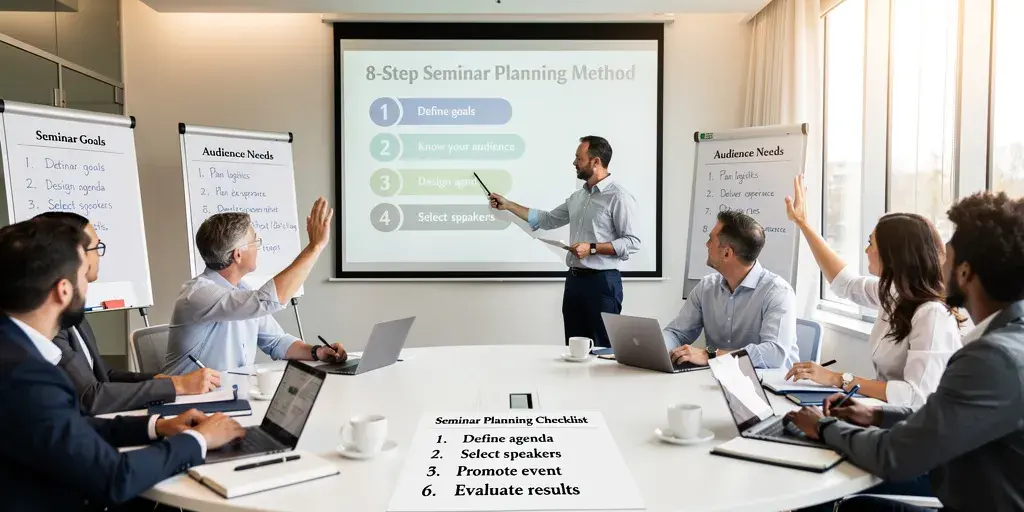
Well-rehearsed seminar
- Objectives and budget : define a measurable objective, budget per participant and formalize a follow-up to save time.
- Logistics and reverse planning : secure location, catering, AV, establish minute-by-minute checklist and operational plan B.
- Tests and reports : test sound and light the day before, formalize decisions, measure indicators and share a summary feedback to then capitalize effectively.
You feel the sun filtering through the blinds. You set up the room and check everything is in order. You review the schedule and refocus your priorities. You define the objective and establish the budget. Here's a business seminar idea which you should not neglect!
The practical guide to organizing a successful and replicable seminar.
You structure the method into actionable blocks. You link the strategy to the field.
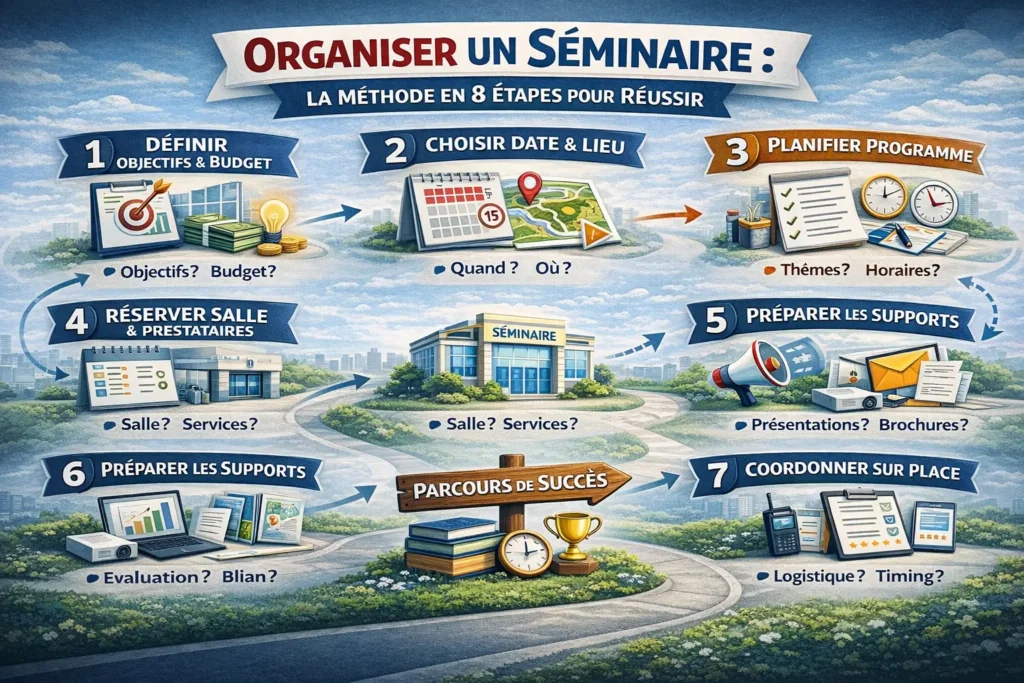
Strategic preparation includes defining the seminar's objectives and the provisional budget.
You identify a measurable objective and describe the target audience. You build a budget per participant and formalize the model. You create an editable Excel file to track the items. You provide a simple deliverable to save time. You can imagine a corporate drone show for the evening. You assess the narrative impact and optimize the set design. You negotiate permits and plan safety margins.
You formalize the scope of the session. You prioritize the success indicators. You archive every strategic decision. You check the consistency of the calendar. You compare the budget with the actual constraints.
| Milestone | Time before the event | Key action |
|---|---|---|
| Validation of objectives and budget | J,90 | Briefing on management and arbitration of positions |
| Venue booking | J,60 | Contract signed and deposit paid |
| Selection of speakers | J,45 | Confirmations and teaching brief |
| AV tests and repetitions | J,3 | Technical checklist and plan B validated |
You link strategy to logistical choices. You anticipate risks and delegate responsibilities. You facilitate internal work and contract with service providers. You plan a unique event to mark the evening.
You are evaluating the impact on the participant experience. You adapt the content to the audience's level. You prioritize the clarity of deliverables. You document every key decision.
The logistical setup includes venue selection, catering, audiovisual equipment, and operational planning.
You inspect the venue to verify capacity and access. You secure catering and event contracts with clear clauses. You develop a minute-by-minute operational plan. You incorporate a technical checklist and a contingency plan.
| Job | Estimated cost per participant |
|---|---|
| AV room and equipment rental | €25 to €60 |
| Food and breaks | €15 to €40 |
| Speakers and activities | €10 to €80 |
| Logistics and miscellaneous | 5 to 20 € |
You centralize registrations via a single form. You arrange event insurance and ensure regulatory compliance. You plan transportation and accommodation for external speakers. You monitor the timeline to avoid unforeseen issues.
You inform the participants in advance. You formalize the operational responsibilities. You test the sound and lighting the day before. You approve the reception area and signage.
You maintain a checklist for the week the day before and on the day itself. You oversee the setup and make any final adjustments. You prioritize clear roles for the field team. You minimize improvisation on the day of the event.
You document the post-event feedback. You measure the indicators defined beforehand. You share a summary report with management. You organize a debriefing between managers and service providers.
Enhance your seminar with Allumee
Incorporating a corporate drone show can transform a traditional seminar into a truly memorable event. You define the narrative objective, integrate the performance into the project timeline, and secure the necessary permits from the planning stage. A site survey and meticulous technical coordination ensure a smooth and compliant execution.
This type of activity creates a strong collective emotion, strengthens team cohesion, and permanently embeds your strategic messages. By collaborating with Allumee, you give your event a spectacular, structured and impactful dimension.
The creative and memorable benefit of a drone show to strengthen team cohesion and impact
You create a collective emotion and amplify engagement. You use the event to reinforce your values. You transform a gathering into a shared memory. You measure the return in terms of internal impact.
You align the visual story with your strategy. You encourage post-event interaction. You strengthen team spirit through shared memory. You are capitalizing on the resonance of the images.
Secure implementation and technical coordination with service providers, permits, and integrated planning
You compile the site permitting and safety study into a single file. You obtain a detailed quote and sign a clear agreement. You define the safety margins and schedule the tests. You integrate the service into the overall project timeline.
You share the file with management and the field. You validate the technical responsibilities before assembly. You control the chain of responsibility during the operation. You archive the trackers and reports.
You engage Allumee for a creative and responsible approach. You agree on a site study and oversee the coordination. You transform the seminar into a strategic and unifying event. You celebrate teamwork and capitalize on the experience.
Further information about this seminar
How is a seminar organized?
Organizing a seminar is first and foremost about setting objectives and a framework, not just ticking boxes. You identify the main objective, outline the framework, and then draft a realistic budget. Choose the venue, consider logistics and atmosphere, and test the ease of registration for participants, because a lengthy form kills enthusiasm. Plan activities, alternating serious content with informal moments, and share the event internally to generate buy-in. A helpful tip from experience: allow for contingencies and assign a point of contact for each emergency phase. The result: a stronger team and a clearer project.
What is the purpose of a seminar?
The primary goal of a seminar is to bring colleagues together around a common project. Yes, there are presentations and clear objectives, but also those informal moments where the best synergies emerge. Skills are shared, ideas are tested, cohesion is built, and team spirit is cultivated. A seminar also provides an opportunity to unwind, learn in a different way, and strengthen trust among colleagues. Participants often leave with concrete leads, an action plan, and a shared sense of progress. And sometimes, surprisingly, a coffee break becomes the best creative session. These moments boost motivation and foster skills development.
What are the legal obligations of an event organizer?
Organizing an event also means managing legal obligations and responsibilities, which often seem overwhelming. You have to ensure the accounting for ticketing, comply with ticketing regulations, and establish clear refund policies. Online ticketing helps, but it doesn't eliminate administrative duties. Event security, venue compliance, and emergency protocols are essential. Don't forget the necessary insurance, including liability coverage and cancellation guarantees. A helpful tip: document every decision and keep records for audits. It's a serious undertaking, but well-organized, it protects the team and allows you to focus on the attendees' experience. And, if needed, seek external legal advice.
What are the 3 stages of a conference?
A successful conference follows three clear steps, even if reality sometimes takes a different turn. First, planning and preparation: define objectives, target audience, content, logistics, and rehearse (yes, rehearse!), test materials. Second, the presentation: capture attention, vary the pace, use anecdotes and interact, accept mistakes, and adjust on the fly. Third, follow-up and evaluation: gather feedback, analyze the impact, and transform lessons learned into action. Finally, integrate the learnings into your daily work. A little confession: often, real change comes from the follow-up, not the perfect slide. So, plan, present, follow up, rehearse—you learn as you go, and you progress.